

What Road Salt Really Does to Your Wheels (And How to Protect Them)
Posted by BB Wheels on 3rd Nov 2026

After a few drives on treated winter roads, even a great-looking set of wheels can end up covered in a chalky white film. It collects around the spokes, along the rim lip, and in places that aren’t easy to reach during a quick wash.
Some of that buildup is simply residue that can be rinsed away. But when salty moisture sits against a wheel’s finish repeatedly, the problem can go beyond appearance.
If you’ve invested in aftermarket wheels, understanding what road salt actually does—and how different finishes hold up—can help you avoid an unpleasant surprise when spring rolls around.
What does road salt actually do to your wheels?
Road salt serves an important purpose. By lowering the freezing point of water, it helps road crews manage ice and keep winter roads safer. Depending on the conditions and location, crews may use sodium chloride (ordinary road salt), calcium chloride, magnesium chloride, or combinations of deicing materials.
The trouble starts when those chemicals mix with water and slush, then splash onto your wheels.
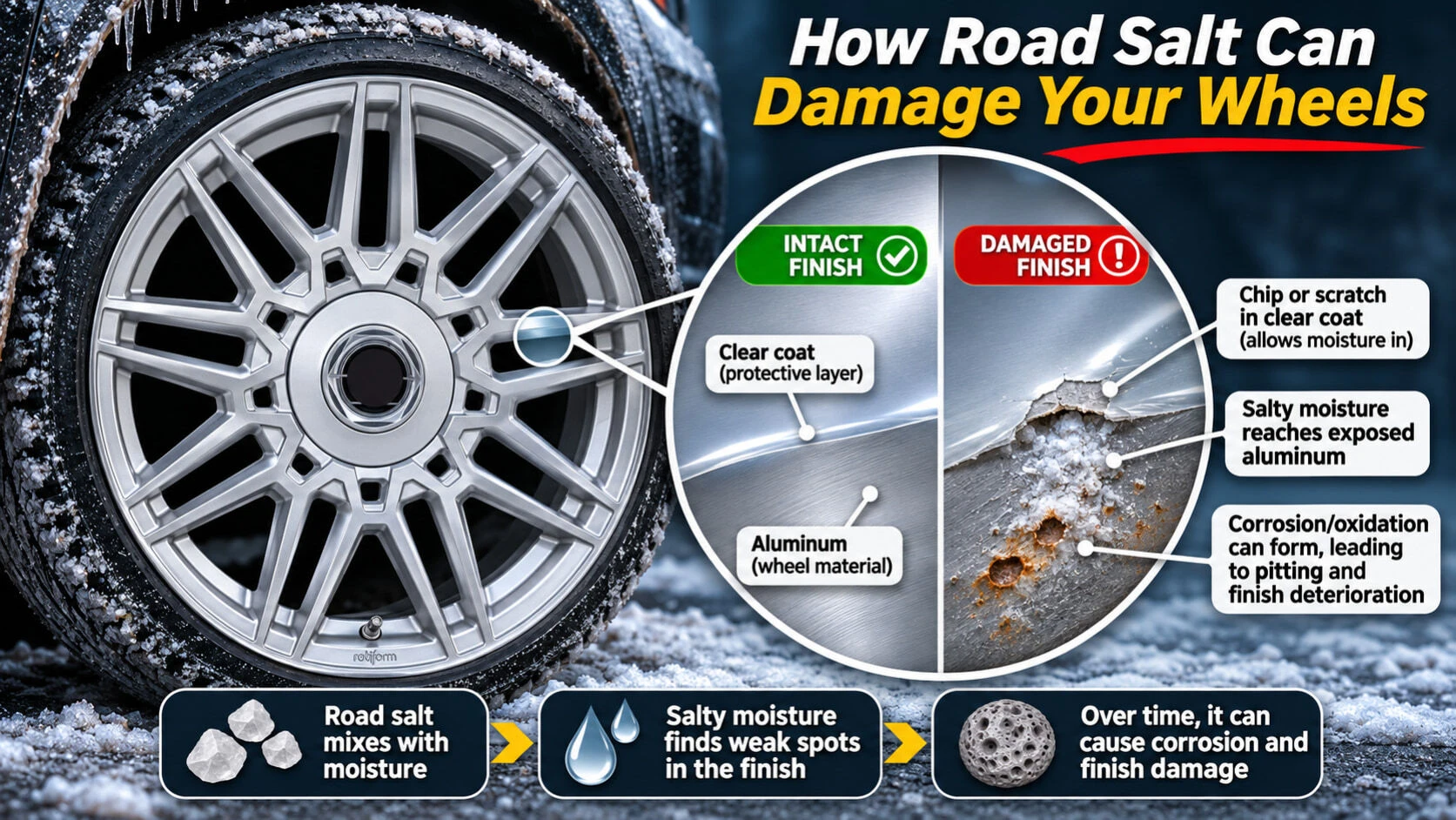
As that moisture dries, salt-containing residue can remain on the surface. The next time your wheels get wet, some of that residue can dissolve again, exposing the finish to another round of salty moisture.
Salt doesn’t automatically ruin a wheel, but it can accelerate corrosion when the right conditions are present.
Chlorides in salty water can contribute to corrosion of exposed metal. A wheel’s paint, powder coating, plating, or clear coat helps protect what’s underneath, but that protection isn’t always perfect.
A small chip from road debris, a scrape along the rim lip, or an area of deteriorating clear coat can leave the underlying surface more vulnerable. Over time, corrosion may develop around these damaged areas, sometimes spreading beneath the surrounding finish.
That’s why two sets of wheels exposed to similar winter conditions can age very differently. Their finishes, existing damage, and maintenance all matter.
Are some wheel finishes more vulnerable to road salt?
Not all aftermarket wheels have the same finish, and that makes a difference when winter road treatments come into play.
Chrome-plated wheels
Chrome wheels offer a bright, reflective appearance, but traditional chrome plating requires careful maintenance in areas where road salt is common.
Repeated exposure to salt, moisture, and road debris can contribute to pitting or deterioration of the plated surface, particularly if the finish has already been compromised. Once pitting develops, a normal wash won’t restore the original smooth finish.
Wheel Pros’ chrome-wheel care guidance specifically advises avoiding winter salt conditions when another wheel set is available.
One important distinction: not every wheel with a chrome-like appearance uses traditional chrome plating. Different finish technologies have different care requirements, so check the manufacturer’s specifications rather than judging by appearance alone.
Polished aluminum wheels
Polished aluminum can deliver a distinctive shine, but uncoated polished aluminum requires more attention than many drivers realize.
Aluminum doesn’t develop the familiar reddish-brown rust associated with iron or steel. Instead, it can oxidize, creating a dull, cloudy, or whitish appearance. In more severe cases, localized corrosion may cause pitting.
Bare polished aluminum is especially worth monitoring during winter because it lacks the additional paint or clear-coat barrier found on many other wheel finishes.
Some polished-looking wheels do have protective coatings, however. Before attempting to remove oxidation or restore the shine, make sure you know whether the surface is bare metal or clear-coated.
Painted and powder-coated wheels
Painted and powder-coated wheels can be practical choices for winter driving because their finishes provide a protective barrier between the environment and the metal underneath.
A properly finished wheel with an intact coating may handle repeated exposure better than a more maintenance-sensitive bare or plated finish. But that doesn’t make it immune to damage.
Stone chips, curb rash, scratches, and deteriorating coatings can create openings where salty moisture reaches the material underneath. Regular washing still matters, even with a durable finish.
For drivers shopping specifically for a winter setup, a fully painted wheel may be worth considering, provided its manufacturer recommends it for the conditions.
Machined and clear-coated wheels
Machined wheels are popular for their contrasting surfaces and precisely cut appearance. Many designs feature a machined aluminum face protected by a transparent clear coat.
That clear coat plays an important role in maintaining the finish. If the coating becomes damaged, moisture and road salt can reach vulnerable areas beneath it. Over time, the result may appear as cloudy patches, discoloration, bubbling, or peeling along the machined surface.
The important takeaway isn’t that machined wheels can’t be driven in winter. It’s that maintaining the protective finish is particularly important, and the manufacturer’s care instructions should guide your routine.
How to protect your aftermarket wheels from road salt
You don’t need an elaborate detailing routine every time the roads are treated. A few consistent habits can help reduce unnecessary exposure and make developing problems easier to spot.
1. Wash away salt before it builds up
The simplest protective step is also one of the most useful: don’t let road salt and winter grime accumulate indefinitely.
After stretches of driving on heavily treated roads, rinse your wheels when weather conditions allow. Pay attention to the outer lip, the spaces between spokes, and other areas where slush and residue can collect.
For routine cleaning:
- Start with a thorough rinse to remove loose salt, sand, and grit before touching the finish.
- Use a mild automotive wash soap and soft microfiber cloth or wheel brush approved for your finish.
- Clean only when the wheels are cool; avoid abrasive pads or harsh chemicals that could damage protective coatings.
- Rinse thoroughly and dry the accessible surfaces when practical.
Be cautious with automatic car washes or strong chemical wheel cleaners. Some wheel manufacturers warn that aggressive cleaners and certain wash equipment can damage finishes.
If outdoor temperatures are below freezing, wait for a suitable washing opportunity or use an appropriate indoor wash facility. Make sure water can drain and dry without freezing around the vehicle.
The goal isn’t to keep your wheels spotless through every snowstorm. It’s to avoid leaving corrosive residue sitting on them longer than necessary.
2. Check for chips, scratches, and finish damage
Winter cleaning is also a good opportunity to inspect your wheels. Look closely at the outer rim lip, spoke edges, and areas where road debris or curb contact may have damaged the finish.
Small chips may seem purely cosmetic, but a compromised protective coating can make the surrounding area more vulnerable to moisture and corrosion. Watch for changes such as peeling clear coat, developing pits, bubbling paint, or persistent discoloration.
If you find damage, refer to the wheel manufacturer’s care recommendations or consult a qualified wheel-refinishing professional. Trying to sand, scrape, or aggressively polish a damaged finish can make matters worse.
3. Consider an additional protective wheel coating
Another option is to apply a protective coating that helps make routine wheel cleaning easier.
Ceramic coatings are designed to create an additional surface layer. Depending on the product and the wheel finish, they can help reduce the tendency of dirt and contaminants to adhere, making buildup easier to remove during normal washing.
For more detail about the kit, see our ceramic wheel coating guide. Always follow the product’s application directions and your wheel manufacturer’s finish-care recommendations.
4. Consider a separate set of winter wheels
If you have an expensive or particularly maintenance-sensitive set of aftermarket wheels, there’s another approach worth considering: keeping them off the road during the harshest part of winter.
A separate winter wheel-and-tire setup allows you to reduce salt exposure on your preferred wheels while using a different setup for cold-weather driving. It can also make seasonal tire changes more convenient when both sets are properly assembled and compatible with your vehicle.
That doesn’t necessarily mean you need steel wheels or a specific finish. Suitable winter wheel options depend on your vehicle, available finishes, and the manufacturer’s recommendations.
Proper fitment is essential. Brake clearance, bolt pattern, wheel offset, load capacity, tire sizing, lug hardware, and TPMS compatibility all need to be considered.
And remember, dedicated winter wheels aren’t maintenance-free either. They’ll still benefit from regular cleaning.
A second set won’t make sense for every driver, but for someone who wants to preserve the appearance of a favorite set of aftermarket wheels, it can be a practical long-term choice.
Is that salt residue or actual wheel damage?
One of the easiest mistakes is assuming every white or discolored spot on a winter-driven wheel is corrosion.
Road salt can dry into a light-colored film, especially around edges and recessed areas. That doesn’t necessarily mean the finish underneath has been damaged.
The first step is a careful wash using products appropriate for the wheel’s finish. If the residue disappears and the surface looks normal afterward, you may have been dealing with ordinary winter contamination.
If the discoloration remains, take a closer look. A dull or cloudy appearance on exposed aluminum may indicate oxidation. Small pits in the surface or clear coat that appears to be lifting or peeling can point to more substantial finish deterioration.
Rust-colored specks require a little extra caution when diagnosing the problem. Aluminum itself doesn’t rust like steel, and brown or orange spots on an alloy wheel may come from iron-containing brake dust rather than corrosion of the wheel material.
What matters is the condition of the surface after the contamination has been safely removed.
If you notice persistent pitting, peeling, bubbling, or corrosion beneath a finish, ordinary cleaning is unlikely to restore the wheel to its original condition. Professional refinishing may be possible, depending on the wheel and severity of the damage.
Have a qualified wheel professional evaluate significant deterioration or any suspected structural damage. Don’t attempt aggressive repairs on a wheel without understanding the finish and whether the wheel is safe to continue using.
A little winter maintenance goes a long way
Road salt is a necessary part of winter driving in many parts of the country, but that doesn’t mean your wheels have to take unnecessary punishment.
The biggest difference often comes down to understanding the finish you’re driving on, removing salt buildup when practical, and addressing damage before it becomes more extensive.
Whether you run your favorite aftermarket wheels year-round or switch to a separate winter setup, consistent maintenance can help preserve their appearance.
For cleaning and care information beyond the winter months, explore our complete guide to aftermarket wheel care.
Taking care of your wheels now can save you from discovering finish damage when it’s finally time to clean off the last of winter’s grime.