

When Should You Actually Put Winter Tires On?
Posted by BB Wheels on 6th Oct 2026
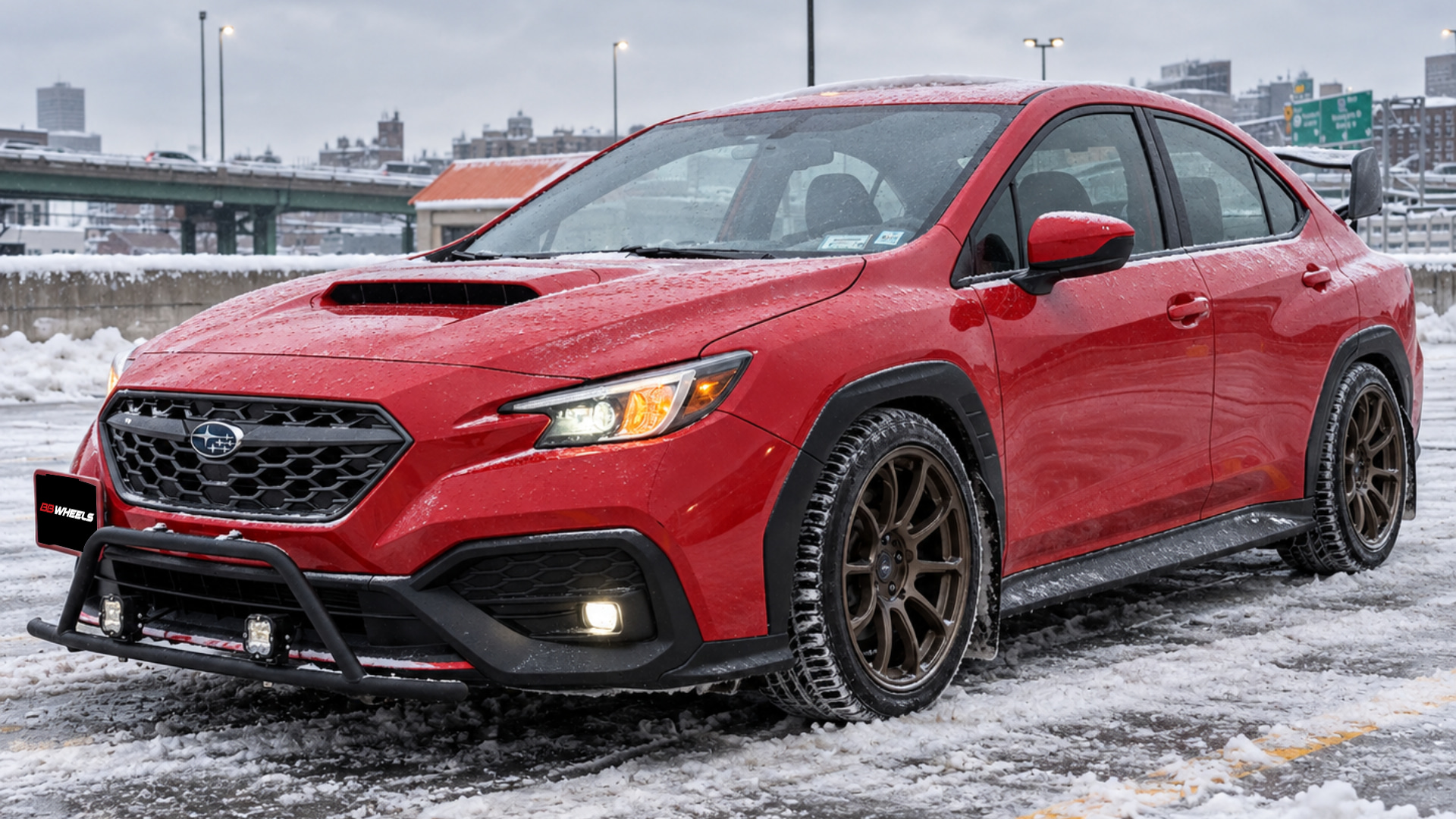
The first snowfall is an obvious reminder to think about winter tires. It is also a late reminder if you still need to choose a set and arrange installation.
If you use a seasonal winter tire setup, a useful target is to make the switch when temperatures are consistently around 45°F or lower—before snow and ice become part of your regular driving. That is about 7°C. Your climate, driving schedule, and current tires should help you decide when to act.
The 45°F rule is a guide, not a precise cutoff
A common manufacturer recommendation is to switch when temperatures consistently fall below about 45°F. Look at the sustained trend, rather than a single cold day.
Treat that as a seasonal planning guide. It does not mean your all-season tires suddenly become unusable at 44°F, or that every winter tire will stop sooner on every cold road.
Different tire models balance dry-road handling, wet traction, snow grip, and ice performance differently. Use the temperature trend to plan your changeover, and choose tires for the conditions you actually face.
Why think about winter tires before it snows?
Winter tires get their cold-weather capability from both the rubber compound and the tread design.
As temperatures fall, tire rubber can become less flexible. Winter compounds are formulated to remain flexible in cold conditions. Their tread also commonly includes numerous sipes—the small cuts in the tread blocks that add biting edges—and grooves designed to manage snow and slush.
That is why the name “winter tire” is more useful than “snow tire.” Snow depth is only part of the decision. Cold weather and the possibility of icy conditions matter, too.
You do not need to wait for a snow-covered driveway to start shopping or schedule the swap. Planning while roads are clear gives you time to get the right setup in place.
Check the weather you actually drive in
There is no single installation date that works nationwide. Instead, ask three questions:
-
Is cold weather settling in? Look at the forecast trend, rather than one unusually chilly night.
-
When are you on the road? A mild afternoon high is less useful if your daily commute happens during much colder mornings.
-
Where will you be driving? Include mountain routes, trips north, and other destinations—not just the weather at home.
A northern daily driver, a mountain commuter, and someone in a mild coastal climate can reasonably choose different timing and different tires. If snow or ice is expected on a route you must drive, do not let a warmer daily average become a reason to postpone preparation.
Already running summer performance tires? Check the tire manufacturer’s cold-weather operating guidance. Those tires are intended for warm conditions and are unsuitable for snow and ice; the requirements for your exact model matter.
What if you only drive in snow occasionally?
Start with how often you encounter winter conditions—and whether you can avoid driving when conditions are poor.
-
All-season tires
Can suit mild climates and limited light-snow use, but their winter capability varies by model.
-
All-weather tires
Are a year-round option with the three-peak mountain snowflake marking. They can be a practical choice for variable winters and occasional snow when you want one set of tires.
-
Dedicated winter tires
Deserve a closer look when snow and ice are recurring conditions, particularly if you must commute through them. They use cold-weather compounds and tread features designed for winter driving.
The three-peak mountain snowflake (3PMSF) symbol is useful, but it does not make every tire carrying it a dedicated winter tire. It indicates that a tire meets a defined snow-traction standard. It does not certify ice grip or guarantee equal braking and cornering performance across tire models. You may also see the symbol on all-weather and some all-terrain tires.

For a truck or Jeep, a rugged tread pattern alone does not answer the winter question. Look at the exact tire’s intended use and performance, not just how aggressive it looks.
If snow is rare and you can postpone a trip, that flexibility matters. If you have to leave for work regardless of the forecast, choose with that obligation in mind. When roads are in poor condition, postpone non-essential travel.
AWD and 4WD do not replace winter grip
AWD or 4WD can help a vehicle use available traction to get moving. It cannot create grip that the tires do not have, and getting away from a stop is a different job from braking or turning on ice.
That applies to an AWD crossover as much as a 4WD pickup. If your driving conditions call for winter tires, the drivetrain does not remove that need.
When you switch, install winter tires at all four positions. Putting them only on the drive wheels can leave the vehicle with unbalanced traction. Follow the vehicle manufacturer’s fitment requirements.
Can you put winter tires on too early?
Yes—there is a trade-off to running them through an extended stretch of warm weather. Their cold-weather rubber and tread design can mean faster wear and less precise handling in warmer conditions.
Use the sustained weather trend to choose your installation window. One cold morning followed by weeks of mild weather is different from a season that is steadily turning colder. Plan the appointment ahead of time, then coordinate the actual changeover with the forecast and your tire maker’s guidance.
A second wheel set can simplify the changeover
Winter tires can be mounted on your current wheels. A dedicated second wheel set lets you keep each seasonal tire set mounted, so changeovers involve swapping wheel-and-tire assemblies instead of remounting the tires.
It also lets you put your favorite aftermarket wheels away for the season. The winter wheels still need appropriate care, especially where road salt is used.
Before choosing the setup, confirm tire size and required load capacity, wheel fitment and brake clearance, correct lug hardware, and compatibility with your vehicle’s tire pressure monitoring system. A matching bolt pattern alone is not a complete fitment check.
When should winter tires come off in spring?
Use the warming trend: once temperatures consistently stay above about 45°F, it is generally time to switch back to your warm-weather or all-season setup. Consider the weather during your commute, any remaining trips into winter conditions, and your tire maker’s guidance before scheduling the swap.
At either seasonal changeover, inspect the tires for wear and damage and check cold inflation pressure against the vehicle manufacturer’s recommendation. Whatever tires you run, slow down and leave more following distance on slippery roads.