

Why Your TPMS Light Turns On in Cold Weather (and the Right Fix)
Posted by BB Wheels on 19th Jan 2026
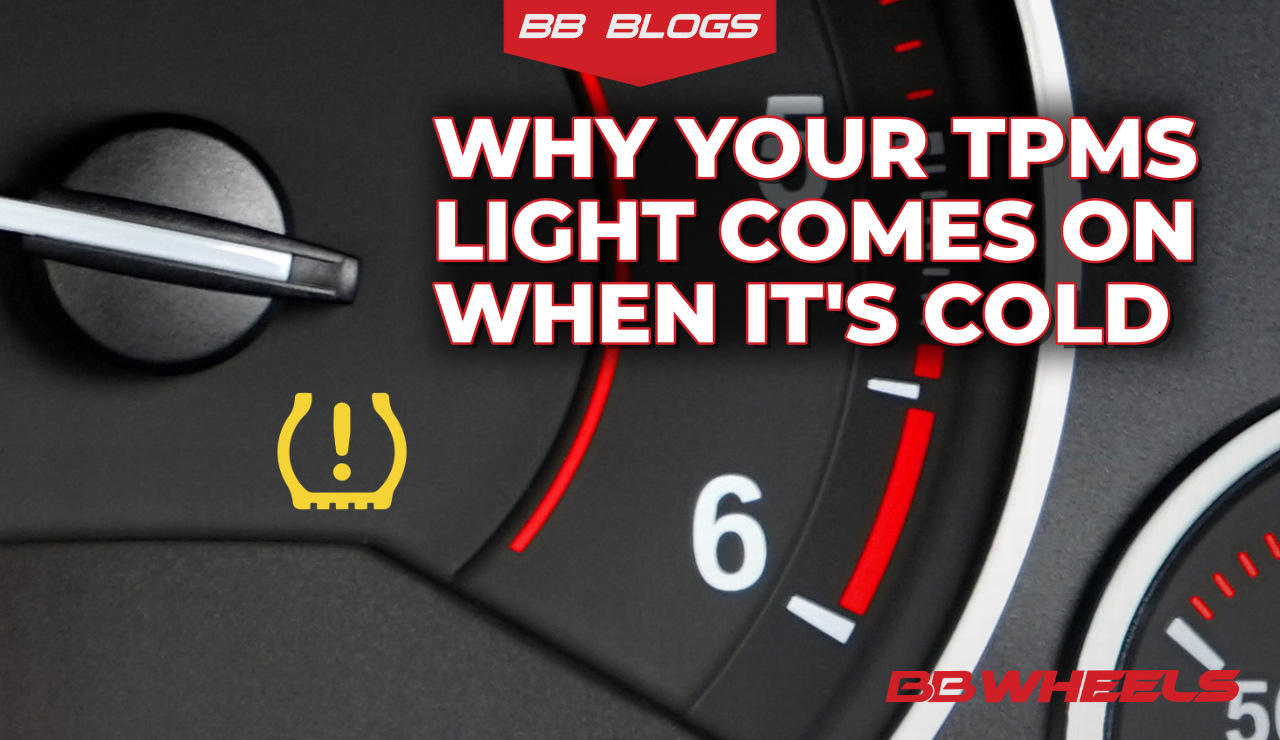
Why Your TPMS Light Turns On in Cold Weather (and the Right Fix)
If you’re seeing a TPMS light in cold weather, the core reason is usually simple: cold temperatures drop tire pressure, and that pressure drop can trigger your tire pressure monitoring system (TPMS).
It often shows up on the first cold snap of the season. One day everything looks fine, then you wake up to a warning light. The good news: in many cases, the fix is quick and safe—as long as you handle it the right way.
What TPMS Actually Monitors (Plain English)
TPMS doesn’t measure temperature. It doesn’t measure tread depth. It doesn’t know if your tires are “good” or “bad.”
What it monitors is tire pressure. When pressure drops below the vehicle’s warning threshold, the system turns on the TPMS light.
So why does it happen in cold weather? Because when the air inside your tires gets colder, it takes up less space and the pressure reading drops. That’s why the TPMS light often appears on the first big temperature drop—even if the tires were fine a week ago.
Common Cold-Weather TPMS Scenarios (and What They Mean)
1) The light is on in the morning, then turns off after driving
This is a classic cold-snap pattern. Overnight temps drop, tire pressure falls, and the light comes on. After driving, the tires warm up and the pressure rises a bit, so the warning may disappear.
What to do: Don’t ignore it. It still means the pressure is borderline low when cold—which is when you need correct pressure the most.
2) The light stays on for days
If the TPMS light stays on consistently, your tire pressure is likely low enough that normal driving heat isn’t bringing it back above the threshold.
What to do: Check and set pressures when the tires are cold, then recheck after 24 hours.
3) One tire is consistently low
If one tire keeps dropping faster than the others, that’s usually not “just cold weather.” That pattern typically points to a slow leak or a sealing issue.
What to do: Inflate to spec, then monitor it. If it drops again, it's time to check for a slow leak.
4) The light flashes, then stays on
A TPMS light that flashes first and then stays solid often indicates a sensor/system issue instead of simple low pressure.
What to do: Start with a pressure check anyway (low pressure can still be present), but plan to diagnose the TPMS system (sensor battery, relearn needed, or a fault).
The Right Fix (Step-by-Step)
- Step 1: Check tire pressure when the tires are cold. Cold means the car has been parked for a few hours (not after driving).
- Step 2: Inflate to the PSI on the driver door jamb. Use the vehicle’s recommended PSI—not the maximum PSI listed on the tire sidewall.
- Step 3: Recheck after 24 hours. This confirms the pressure is stable and not bleeding down.
- Step 4: Recheck after the next big temperature swing. A sudden drop can pull borderline tires back under the warning threshold.
Pro tip: If you’re adjusting pressure in cold weather, do it when the tires are truly cold so you aren’t setting a “warm” pressure that becomes low again the next morning.
When It’s NOT Just Cold Air
Sometimes cold weather is only the trigger that exposes a bigger issue. Here are warning signs that usually mean something else is going on:
- One tire drops faster than the rest: likely a slow leak (puncture, valve, bead leak, or wheel damage).
- Pressure drops repeatedly even after proper inflation: leak or sealing issue needs inspection.
- TPMS light flashes first, then stays on: system fault is likely (sensor, battery, or communication issue).
- The light came on right after new wheels/tires: a relearn may be needed, or sensors may not be communicating correctly.
- Visible damage or vibration after a pothole hit: possible wheel damage or bead seal issue.
TPMS Reset & Relearn Basics (Non-Vehicle-Specific)
TPMS behavior varies by vehicle. Some cars auto-relearn after you drive for a bit. Others require a manual relearn procedure (sometimes through the infotainment menu) or a shop tool to program sensor positions.
If your TPMS light stays on after you’ve corrected tire pressure, or if it flashes first and then stays on:
- Check your owner’s manual for the recommended reset/relearn procedure, or
- Have a tire shop perform a clear/relearn with the correct tool.
Bottom line: Always fix pressure first. If the pressures are correct and the light won’t clear, then it’s time to look at the TPMS system itself.
Why Low Tire Pressure Matters (Safety + Tire Life)
It’s tempting to treat the TPMS light as a minor annoyance, but low pressure can affect the things you care about most:
- Handling: low pressure can make steering feel loose or unstable.
- Braking: underinflated tires can increase stopping distances.
- Tire wear: low pressure can cause faster, uneven wear and shorten tread life.
- Heat buildup: underinflation creates extra flex and heat, which can damage the tire over time.
FAQ
Why does my TPMS light come on when it gets cold?
Cold temperatures lower tire pressure. If the pressure drops below your vehicle’s warning threshold, the TPMS light turns on.
Why is my TPMS light on in the morning but off after driving?
Overnight temps lower tire pressure. After driving, the tire warms up and pressure rises slightly, which can temporarily clear the warning.
What PSI should I inflate my tires to?
Use the PSI listed on the driver door jamb sticker. Do not inflate based on the tire sidewall maximum PSI.
How long should I wait before rechecking pressure?
Recheck after about 24 hours, and again after the next major temperature swing, especially during early winter weather changes.
What does it mean if one tire keeps getting low?
That usually points to a slow leak—commonly a nail/screw, a valve core leak, a bead seal issue, or wheel damage.
What does it mean if the TPMS light flashes then stays on?
A flashing TPMS light (followed by a solid light) often indicates a sensor or system fault. Check pressures first, then inspect the TPMS system if the warning persists.
Do I need a TPMS reset after adding air?
Many vehicles clear the light automatically after driving. Some require a reset/relearn procedure. If pressures are correct and the light won’t clear, check your owner’s manual or have a shop perform a relearn.
Bottom Line
A TPMS light in cold weather is usually your tires telling you they’re a little low after a temperature drop. The right fix is simple: check pressure when cold, inflate to the driver door-jamb PSI, and recheck after 24 hours and after the next big temperature swing. If one tire keeps dropping or the light flashes, treat it as a sign to check for leaks or a TPMS system issue.
Not sure what the right PSI should be for your vehicle or which tires make sense for your climate?
Call 320-333-2155 and our team can help with tire selection and fitment questions.