

Michelin CrossClimate2 vs Bridgestone WeatherPeak: Which All-Weather Touring Tire Should You Buy?
Posted by BB Wheels on 14th Jan 2026
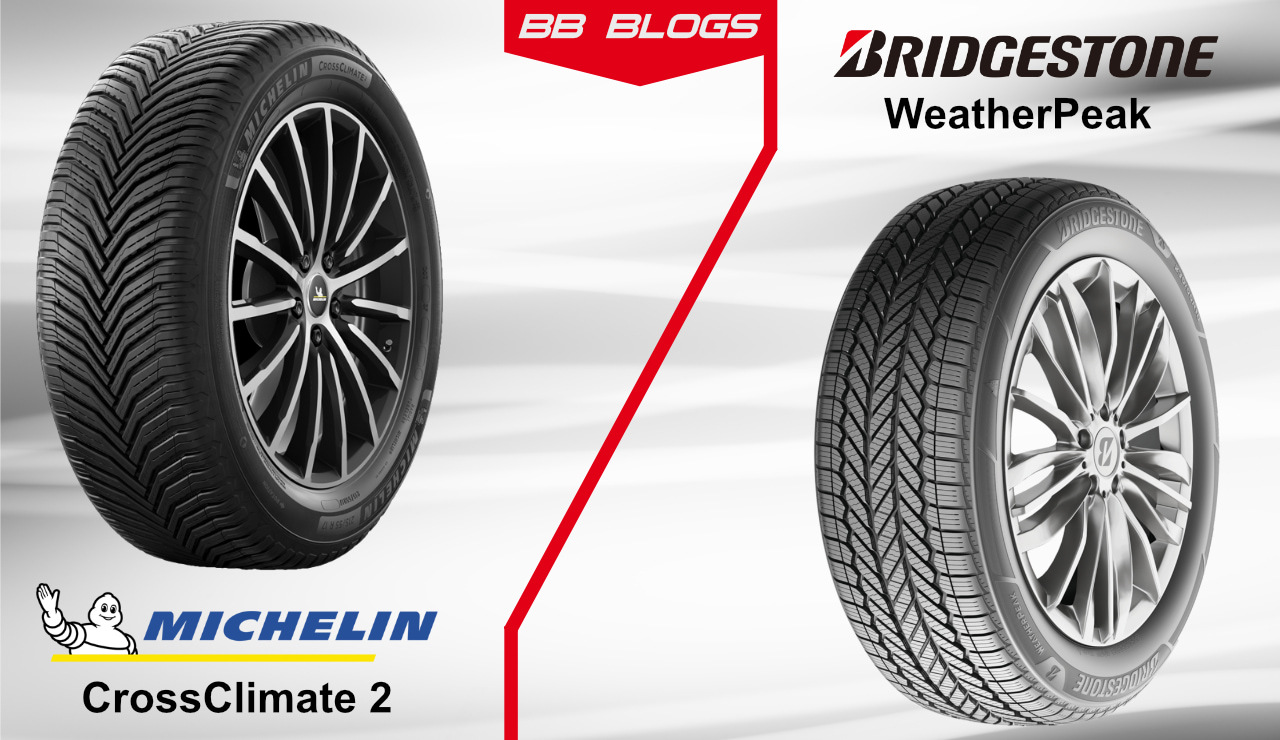
Michelin CrossClimate2 vs Bridgestone WeatherPeak: Which All-Weather Touring Tire Should You Buy?
If you’re shopping for a true year-round touring tire that can handle rain, cold temps, and snow without switching to a dedicated winter setup, two names come up constantly: Michelin CrossClimate2 and Bridgestone WeatherPeak.
Both are built for drivers who want one set of tires to run through changing seasons, and both are commonly chosen for sedans, crossovers, SUVs, and daily-driven vehicles that see real weather.
This comparison breaks down the differences that matter most in everyday driving:
Shop Michelin CrossClimate2 | Shop Bridgestone WeatherPeak
- How the tread designs differ (and why that affects rotation and feel)
- Wet traction and highway stability
- Snow confidence for winter driving
- Ride comfort and road noise
- A simple decision guide to pick the better fit
Quick Comparison: CrossClimate2 vs WeatherPeak
- Michelin CrossClimate2: A directional, V-shaped design that leans into year-round traction and confident handling feel.
- Bridgestone WeatherPeak: A symmetric touring-style design built for balanced traction, smooth manners, and easy rotation patterns.
- Bottom line: If you want a more performance-leaning, “locked-in” feel, CrossClimate2 is often the pick. If you want a more traditional touring personality with rotation-friendly flexibility, WeatherPeak is a strong match.
What These Tires Are Designed For
CrossClimate2 and WeatherPeak are commonly referred to as all-weather touring tires because they’re intended to bridge the gap between typical all-season tires and winter-focused options. They’re popular for drivers who:
- See four seasons and want better cold-weather confidence than a standard all-season
- Drive in rain and slush and want stable wet traction
- Prefer a single set of tires year-round instead of seasonal tire swaps
Important note: No all-weather tire replaces a dedicated winter tire in truly harsh conditions. If you regularly drive on steep hills, frequent ice, or unplowed roads, a winter tire setup can still be the safer choice.
Tread Design Differences (and Why They Matter)
Michelin CrossClimate2: Directional V-Shape Pattern
CrossClimate2 is known for its directional, V-shaped tread design. Directional patterns are commonly used to help manage water and keep traction consistent as conditions change.
- Often delivers a more confident, precise steering feel for a touring tire
- Typically uses more limited rotation patterns (commonly front-to-back unless remounted)
- May produce a more noticeable tread tone on certain pavement types compared to traditional touring designs
Bridgestone WeatherPeak: Symmetric Touring Pattern
WeatherPeak uses a symmetric tread pattern that focuses on balanced year-round traction with a smooth, everyday touring feel.
- Usually allows the easiest rotation patterns to help even out wear
- Leans toward a calmer, more traditional touring driving experience
- Designed to stay composed in wet and cold conditions without feeling aggressive
Dry Road Feel: Steering Response and Daily Driving
If you care about how a tire feels on dry roads, here’s the typical difference in personality:
- CrossClimate2: Often feels more responsive and “connected” for a touring tire, with a more confident steering feel.
- WeatherPeak: Often feels smoother and more relaxed, prioritizing touring comfort and stable highway manners.
If your daily driving includes lots of highway time and you want a calm, comfortable ride, WeatherPeak fits that goal well. If you want a touring tire that feels more precise and controlled, CrossClimate2 is usually the better fit.
Wet Traction: Rain, Slush, and Standing Water
Wet grip is one of the biggest safety categories for most drivers because it shows up year-round—spring rain, summer storms, fall cold rain, and winter slush.
- CrossClimate2: Directional tread design is built to support confident wet traction and water evacuation.
- WeatherPeak: Symmetric touring-focused design emphasizes stable wet handling and predictable road manners.
Practical takeaway: If your biggest concern is wet traction, both are strong choices in this category. The tie-breaker is usually comfort/noise, tread design preference, and the type of winter driving you actually do.
Snow Confidence: Which One Is Better in Winter?
These are popular because they’re designed for drivers who want one tire to handle winter conditions more confidently than a standard all-season.
- CrossClimate2: Often favored by drivers who want a more planted feel when winter roads get slick, including when turning and accelerating.
- WeatherPeak: Often favored by drivers who want a very composed touring ride while still gaining winter-ready confidence for braking and everyday snow driving.
Simple way to choose: If your winter driving regularly includes slick conditions and you want a tire that feels more “locked in,” CrossClimate2 is a common pick. If you want winter capability but you prioritize a smoother touring personality, WeatherPeak is a strong option.
Comfort and Road Noise
Ride quality and tread noise can be the difference between liking a tire and loving it—especially on long highway drives.
- WeatherPeak: Typically leans more toward a refined touring feel and quiet road manners.
- CrossClimate2: Comfortable overall, but its distinct directional tread can create more noticeable tread sound on some road surfaces.
CrossClimate2 vs WeatherPeak: Side-by-Side Summary
| Category | Michelin CrossClimate2 | Bridgestone WeatherPeak |
|---|---|---|
| Tread Design | Directional V-shape | Symmetric touring pattern |
| Dry Road Feel | More responsive / precise feel | Smooth, calm touring feel |
| Wet Confidence | Strong wet traction focus | Stable touring wet manners |
| Winter Use | Often chosen for planted winter feel | Often chosen for composed touring + winter confidence |
| Rotation Flexibility | More limited (directional) | More flexible (symmetric) |
Which One Should You Buy?
Pick Michelin CrossClimate2 if:
- You want a touring tire that feels more responsive and confident
- You want strong year-round traction in changing conditions
- You’re fine with a directional tread design and its rotation limitations
Pick Bridgestone WeatherPeak if:
- You want a smoother, more traditional touring personality
- You value easy rotation patterns to help keep wear even
- You want a confident all-weather touring tire without an aggressive feel
Fitment Tips Before You Buy
- Confirm your exact tire size, load index, and speed rating
- If you drive AWD/4WD, keep tread depth closely matched across all four tires
- Plan a rotation schedule that matches the tire type (directional vs symmetric)
- Check for any OEM requirements your vehicle may have
FAQ
Is CrossClimate2 better than WeatherPeak?
It depends on what you prioritize. CrossClimate2 is often chosen for a more responsive feel and confident year-round traction, while WeatherPeak is often chosen for a smoother touring ride and rotation-friendly design.
Do I still need winter tires with either one?
If you frequently drive in severe winter conditions (ice, steep hills, unplowed roads, or deep snow), dedicated winter tires can still provide a meaningful safety advantage.
Which one is quieter?
Many drivers shopping this category prioritize comfort and low noise, and WeatherPeak is commonly chosen for a more traditional, refined touring feel. Road noise can also vary by vehicle, road surface, and tire size.
Bottom Line
Michelin CrossClimate2 vs Bridgestone WeatherPeak comes down to driving personality and priorities. If you want a more precise, confident feel with a directional traction-focused design, CrossClimate2 is a strong choice. If you want a calmer, rotation-friendly touring tire that stays composed in wet and winter conditions, WeatherPeak is an excellent option.
Not sure which tire fits your driving style and winter conditions?
Call 320-333-2155 and our team will help you choose the right option for your vehicle.